
What Are the Essential Tools to Own to Do Small Home Repairs?
Summary
- Coastal humidity and salt change which tools last and how to store them
- Start with a compact core kit before buying power tools
- Multi-use tools help in condos; purpose tools matter for safety-critical work
- Some repairs look simple but are risky without training
- Organized, rust-aware storage saves money and time
What Are the Essential Tools to Own to Do Small Home Repairs if You Also Use handyman services in Jacksonville Florida?
Introduction
We maintain and repair homes from Jacksonville Beach to Atlantic Beach and Neptune Beach. The First Coast climate pushes tools harder than most places. Salt air rides the breeze into garages. Sand gets into hinges and drill chucks. Summer storms test fasteners and caulk lines. A small, well-chosen toolkit that stands up to humidity and corrosion makes routine fixes less frustrating.
We see the same pattern in local service calls: a homeowner tries a quick fix with a mismatched screwdriver or a dull bit, a fastener strips, or a valve cracks. The tool list below is based on what actually solves those problems in Jacksonville Florida homes, not a national checklist. We’ll show how to start lean, what to add over time, and where the line sits between safe DIY and work better left to a pro.
Why First Coast homeowners need a reliable tool set
In our experience, coastal homes encounter a steady mix of small repairs. Interior doors swell and rub as humidity shifts. Deck screws corrode faster near the ocean. GFCI outlets in garages trip after storms. Faucet supply lines drip from mineral buildup and vibration. A reliable tool set avoids mid-fix delays and limits damage.
- Condo and townhouse living near Jacksonville Beach favors compact, multi-use tools that store in a closet.
- Single-family homes in Neptune Beach and Atlantic Beach benefit from a slightly broader kit for fencing, outdoor lighting, and deck upkeep.
- Older First Coast homes may have non-standard fasteners and valves; having the right hand tools reduces breakage.
Environmental and climate factors that change your tool choices
- Humidity and salt: Carbon steel rusts fast. Coated or stainless tools last longer. Keep desiccant packs in tool containers.
- Sand and grit: Open-gear tools and ratchets clog. Simple, sealed mechanisms are more reliable.
- Storm season: Flashlights, headlamps, and battery backups matter. So does a voltage tester for post-storm electrical checks.
- Masonry and stucco: Many beach houses use concrete block or stucco. Masonry bits and appropriate anchors are essential.
Common tool myths we see on Jacksonville service visits
Myth 1: Buy a big power tool set first
We routinely fix problems created with the wrong power tool. Overpowered drills crack tile and strip screws. Without good hand tools and measuring tools, power tools don’t help much. Start with a strong hand-tool core.
Myth 2: One tool can do it all
Multi-tools are useful, but they do not replace a real flush-cut saw, a proper pry bar, or a correct driver bit. They save space, not physics.
Myth 3: Safety gear is optional for small jobs
Most injuries we see come from small tasks: a ceiling fan bracket falls, a valve handle snaps, or a wood splinter in the eye. Basic PPE prevents these problems.
Starter toolkit essentials that actually get used here
This is the lean kit we reach for on most First Coast small repairs. It fits in a medium bag or box.
| Category | Tool | Why it matters in coastal homes |
|---|---|---|
| Measuring | 25-ft tape measure; torpedo level; stud finder | Uneven walls and tile require accurate measures; stud finders reduce fastener pull-outs in humid drywall. |
| Driving & Fastening | 6-in-1 screwdriver; set of impact-ready bits; hex key set | Mixed fasteners in furniture and fixtures; coated bits resist rust in garages near Jacksonville Beach. |
| Cutting & Prying | Utility knife; flush-cut pull saw; small pry bar | Trim, caulk removal, and minor wood adjustments without power saw risk. |
| Electrical basics | Non-contact voltage tester; outlet/GFCI tester | Frequent GFCI issues after storms; quick safety checks reduce shock risk. |
| Plumbing basics | Adjustable wrench; channel-lock pliers; PTFE tape | Tighten supply lines, replace aerators, and stop slow leaks common in humid baths. |
| Anchoring | Masonry and drywall anchors; toggle bolts; assorted stainless screws | Block walls and hollow areas in condos; stainless hardware slows rust near the ocean. |
| Adhesives & Sealants | Exterior-grade caulk; construction adhesive; wood filler | Seal small stucco cracks, stop air leaks, and reinforce loose trim before storms. |
| Safety | Safety glasses; ear protection; work gloves; dust mask | Fine dust from fiber-cement and stucco; eye protection for overhead work. |
| Lighting | Headlamp; compact flashlight | Ceiling fan and under-sink work during evening storms or outages. |
We add a compact 12V drill/driver once the hand tool core is in place. For Jacksonville condos with concrete block, a small hammer drill is useful, but not mandatory at the start.
Buying tiers: start lean, upgrade slowly
We see two traps: overbuying a heavy kit that rusts in a garage, and underbuying flimsy tools that round off fasteners. The tiers below balance cost and durability for the First Coast climate.
| Use case | Starter | Mid-tier upgrade | Coastal durability notes |
|---|---|---|---|
| Fastening | Basic screwdriver + bit set | Impact-rated bits; ratcheting driver | Store with desiccant; light oil on bit tips after use. |
| Drilling | Borrow or delay purchase | 12V drill/driver; separate masonry bit set | Keep bits in a sealed case; avoid leaving the drill in an open garage. |
| Cutting | Utility knife; pull saw | Compact oscillating multi-tool | Blow out dust and grit; wipe blades after beachside work. |
| Plumbing | Adjustable wrench; PTFE tape | Basin wrench; spare supply lines | Choose braided stainless lines; swap any corroded shutoff valves. |
| Electrical | NCVT; GFCI tester | Wire strippers; assortment of wire nuts | Store tools dry; test on known live source monthly to confirm function. |
Multi-use tools vs purpose-built gear
Small spaces in Jacksonville Beach condos benefit from multi-use tools. But a few tasks demand purpose tools to avoid damage.
- Good multi-use: oscillating multi-tool for trim undercuts, grout touch-ups, and flush cuts.
- Must-have purpose tools: a real stud finder for heavy items; a basin wrench for hard-to-reach faucet nuts; a proper pry bar for baseboard removal.
- Tradeoff: multi-use tools save storage space; purpose tools reduce risk on safety-critical tasks.
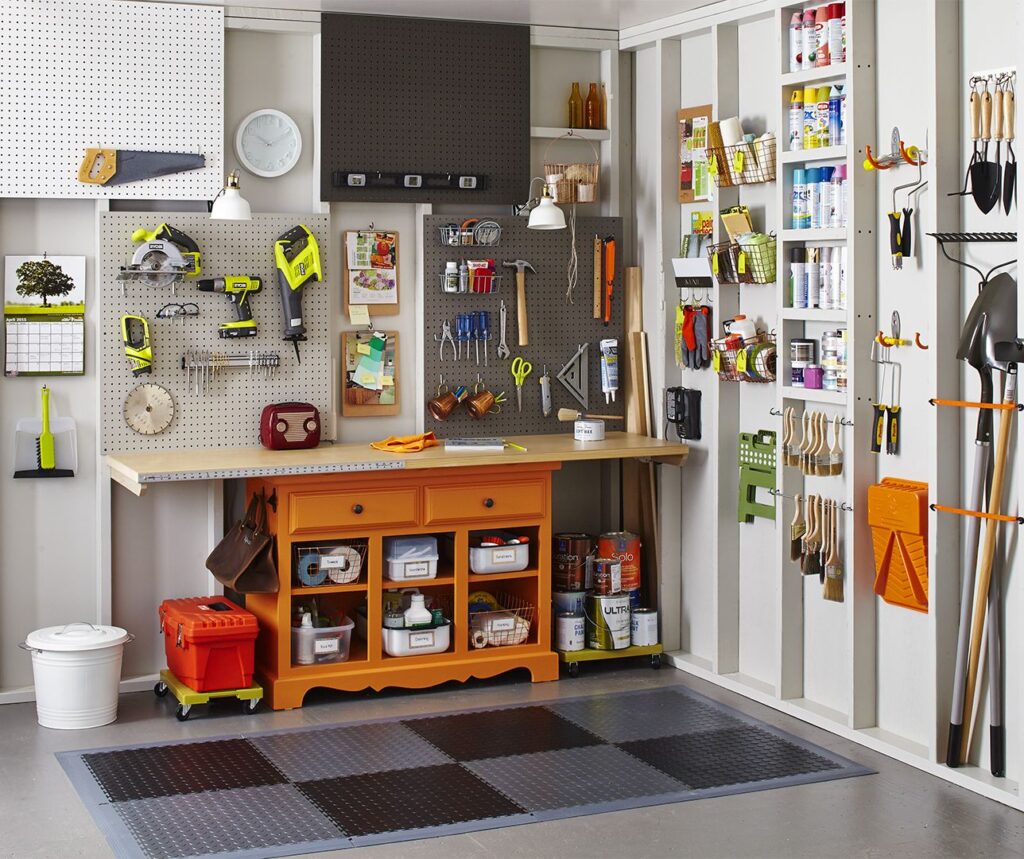
Tool organization and storage in coastal homes
- Container: sealed plastic tote or metal toolbox with a gasketed lid; avoid open buckets in garages.
- Moisture control: silica gel packs; light oil or corrosion inhibitor on pliers and saw blades.
- Segregate: keep masonry bits and anchors in their own case; abrasive dust shortens the life of everything else.
- Wall storage: inside closets or conditioned spaces for condos near the ocean; avoid carports.
- Routine: wipe down tools after outdoor use in Atlantic Beach or Neptune Beach, especially after windy days.
What fixes are normally DIY vs better left to a pro
Often DIY with the kit above
- Replacing faucet aerators, shower heads, and supply hoses
- Re-caulking tubs, showers, and exterior window trim
- Hanging light shelves, small mirrors, and curtain rods with correct anchors
- Swapping outlet and switch plates; testing and resetting GFCI outlets
- Adjusting sticky doors and loose cabinet hinges
Usually pro work on the First Coast
- Electrical circuit changes, subpanel work, and aluminum wiring corrections
- Shower valve replacements inside tiled walls
- Large exterior penetrations through stucco or block
- Structural deck repairs and ledger corrections
- Mold-involved drywall removal or repeated roof leak tracing
For more context on when to handle tasks yourself and when to bring in help, our local guide on DIY home repair tips for Jax Beach and Ponte Vedra covers typical pitfalls we see.
When to call professional handyman services in Jacksonville Florida
We get called after a wall anchor pulls out of a hollow wall, a slow faucet leak turns into a cabinet swell, or a fan box wasn’t rated for the weight. If you’re unsure about load ratings, hidden utilities, or code issues, pause. At that point, contacting handyman services in Jacksonville Florida reduces the chance of compounding damage.
Local conditions matter. For example, corrosion in an exterior junction box in Jacksonville Beach may require new, weather-rated components. A slow toilet leak in Neptune Beach often hides subfloor damage. Regional experience shortens troubleshooting time. For perspective on how locality affects outcomes, see our notes on why hire a local handyman for your Jax Beach home.
Step-by-step checklist to assemble a practical small-repair toolkit
- Pick a sealed toolbox or tote sized to a closet shelf; add two silica packs.
- Add measuring tools: 25-ft tape, torpedo level, stud finder.
- Add drivers: 6-in-1 screwdriver, bit set with Phillips, square, Torx, hex.
- Add pliers and wrenches: adjustable wrench, channel-locks, needle-nose.
- Add cutting/prying: utility knife with extra blades, flush-cut pull saw, small pry bar.
- Add anchoring kit: drywall anchors, toggles, masonry anchors, stainless screws.
- Add electrical basics: non-contact voltage tester, outlet/GFCI tester.
- Add plumbing basics: PTFE tape, spare 3/8-in braided supply lines.
- Add adhesives and sealants: interior/exterior caulk, construction adhesive, wood filler.
- Add PPE: safety glasses, ear plugs, work gloves, dust masks.
- Add lighting: headlamp and flashlight with fresh batteries.
- Optional power: compact 12V drill/driver and a separate masonry bit set.
- Label small boxes for bits, anchors, and hardware; keep instruction sheets.
- Store the kit indoors; calendar a quarterly wipe-down and rust check.
Safety reminders and error-prone repairs we see
- Ceiling fixtures: Fan-rated boxes are different from light-only boxes. We replace many bent brackets in Atlantic Beach homes.
- Anchors in stucco: Pre-drill in the right mode with the right bit. Driving screws into stucco without anchoring causes cracking.
- Shutoff valves: Old angle stops can snap. Test gently and be ready to replace with new braided lines and valves.
- Tile drilling: Mask with tape, use a carbide or diamond bit, and go slow. We repair many cracked tiles from rushed drilling.
- Exterior caulk: Overfilling gaps traps water. Tool the bead thin and continuous.
- Ladders: Don’t lean on wet deck boards after rain; feet slip on algae. We’ve seen preventable falls this way.
Real-world usage contexts around Jacksonville
- Indoors: Sticky doors and seasonal trim gaps; a pull saw and block plane handle small adjustments.
- Outdoors: Fence picket swaps and gate latch resets after storms; stainless screws and a driver save time.
- Garage and carport: Condensation rusts tools; sealed storage and quick wipe-downs extend life.
- Balconies and patios: Masonry anchors for planters and privacy panels; avoid overloading handrails.
Tool selection by home type
- Jacksonville Beach condo: Prioritize a stud finder that reads through drywall over metal studs, toggles for hollow walls, and a compact multi-tool.
- Neptune Beach single-family home: Add a post-hole digger or digging bar as a shared item for fence fixes; keep anchors for stucco and block.
- Atlantic Beach cottage: Keep extra exterior-grade caulk and stainless screws; salt spray accelerates hardware failure.
- Inland Jacksonville Florida neighborhoods: Humidity still matters; rust control remains part of storage.
FAQs
Do I need a hammer drill, or will a regular drill work?
In many First Coast homes with concrete block or brick, a hammer drill saves time and reduces anchor failures. For occasional holes, a regular drill with masonry bits works but is slower and wears bits faster.
What’s the most common anchoring mistake you fix?
Using plastic drywall anchors in stucco or block, or using undersized toggles in hollow walls. We also see stainless screws mixed with regular steel anchors, which causes galvanic corrosion and loosening.
How do I keep my tools from rusting in a beachside garage?
Store tools indoors if possible, or in a sealed tote with desiccant. Wipe down metal surfaces with a light oil. Don’t leave bits and drivers loose; keep them in cases.
When should I stop and call a professional?
Stop when you hit unknown electrical, hidden plumbing, or structural supports. Ceiling fan boxes, shower valves behind tile, and exterior penetrations through stucco are common turning points where contacting handyman services in Jacksonville Florida prevents damage.
Is searching for “handyman services near me” useful in Jacksonville?
That search can surface local options, but what matters is regional experience with First Coast materials and climate. Local pattern recognition reduces trial and error, especially on stucco, block, and salt-exposed hardware.
Conclusion
On the First Coast, tool choice and storage matter as much as skill. We see fewer callbacks when homeowners start with a focused hand-tool kit, add a small drill after a few projects, and store everything away from salt and moisture. Multi-use tools cover most tasks in tight spaces, but purpose tools prevent mistakes on anchors, plumbing, and overhead work. The line between DIY and professional help often shows up where hidden systems and local materials intersect. That’s a judgment call shaped by your home’s age, location, and how often salt air and storms test your hardware.
